

The cloth itself is a specific blend of about 70% cellulose and 30% cotton, manufactured in old textile mills that have been doing this since the 1940s.
Bought a pack of Swedish dishcloths and they stay stiff and crunchy no matter how many times you wash them?
You're not doing anything wrong. You may have bought a fake.
I'm Carla. I design Swedish dishcloths and I created a patented greeting card called a Clard that transforms into two reusable, compostable cleaning cloths the moment you add water. Both live under the Soak iT Up brand. I get a few emails a month from frustrated people who picked up "Swedish dishcloths" at a big-box store and can't figure out why theirs feel like cardboard.
Here's what most packages don't tell you.
———————————————————————————————————————————
Sign Up to SAVE
Find the perfect card that turns into a useful Swedish dishcloth. Thoughtful, sustainable, and unforgettable.
———————————————————————————————————————————
Real Swedish dishcloths are only made in two countries
Germany and Sweden. That's it.
The cloth itself is a specific blend of about 70% cellulose and 30% cotton, manufactured in old textile mills that have been doing this since the 1940s. The cloth gets cut, printed, and packaged in different places, but the actual material only comes from those two countries.
If a "Swedish dishcloth" doesn't tell you where its from, or it lists somewhere else as the source, that's your first flag.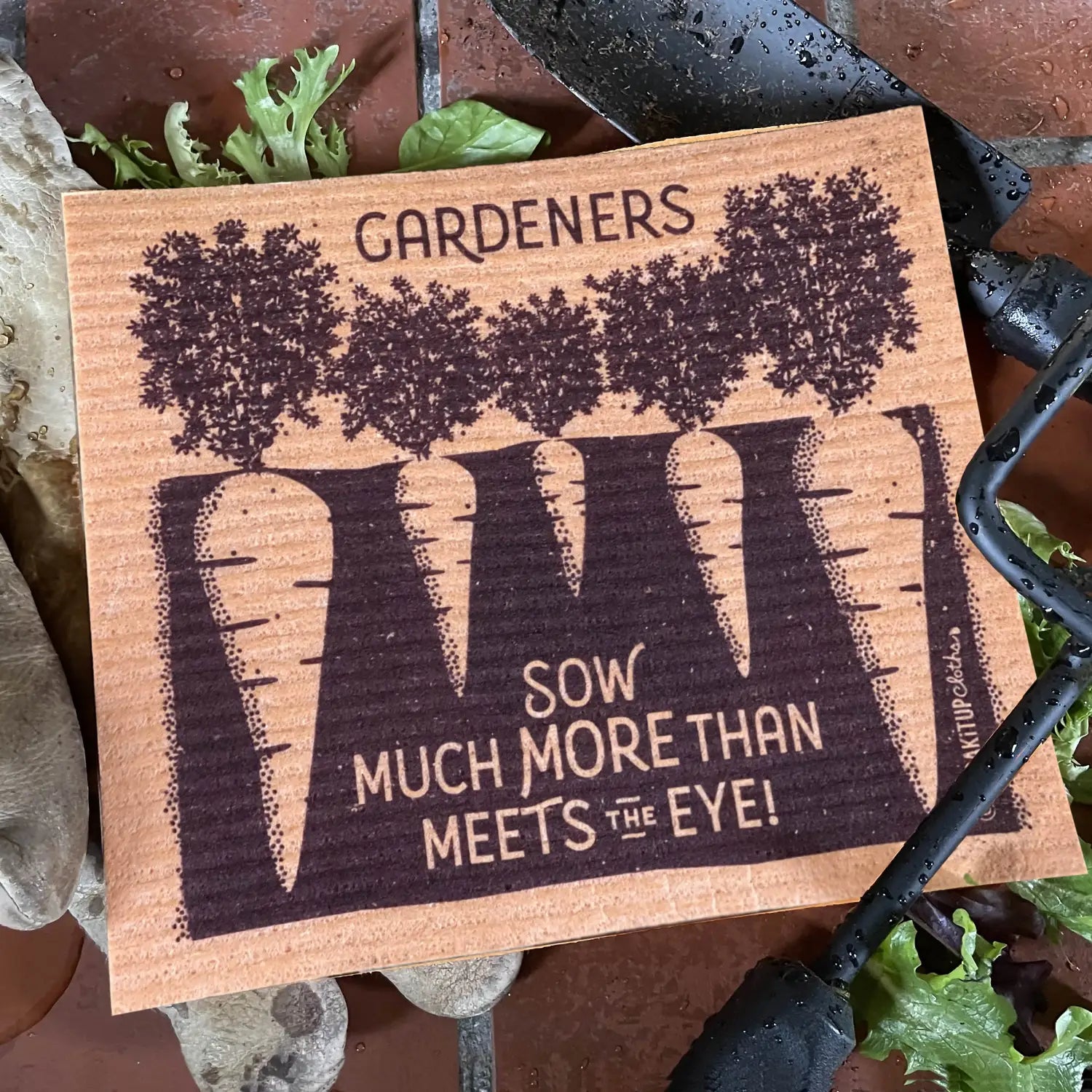
The triangle test (5 seconds, no special tools)
This is the easy one. Flip your dishcloth over. Look at the back.
Real Swedish dishcloths have a small triangle pattern embossed into the cellulose. It's a texture left by the rollers used in the original manufacturing process. You can see it. You can feel it.
No triangles? Probably not a real Swedish dishcloth, no matter what the front of the package says.
The water test (10 seconds, just adds water)
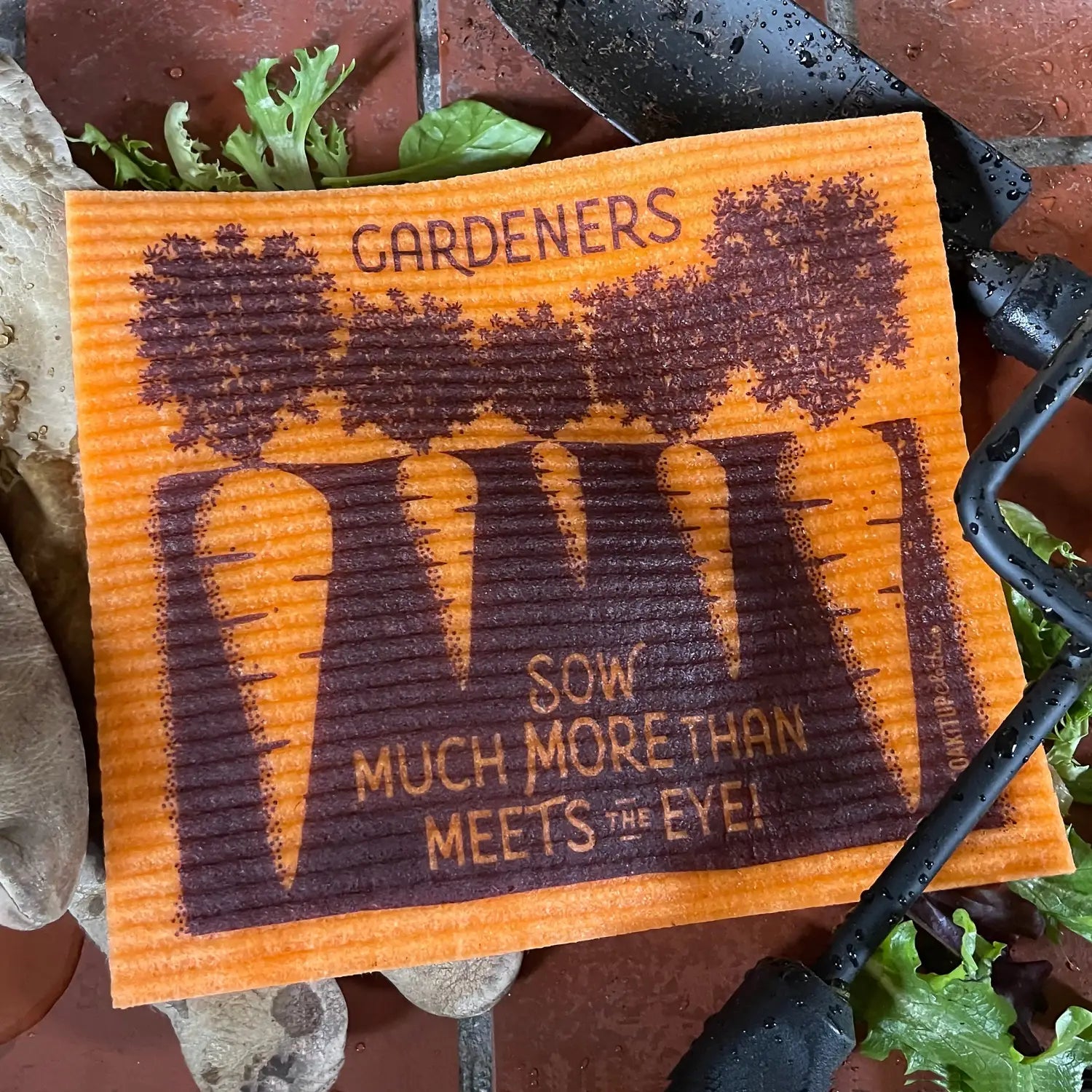
Real Swedish dishcloths come dry and stiff out of the package. The moment you add water, they soften. Within seconds. They go from cardboard-feeling to pliable, like a thick paper towel becoming a sponge in your hand.
If yours stay stiff and crunchy when wet, the cellulose may be blocked. Some printing methods can leave a coating on the surface that may prevent the cellulose underneath from absorbing water. It varies by manufacturer and process.
The way a cloth is printed makes a real difference. I use plant-based inks specifically so the print does not seal the cellulose off. The cloth still works the way it is supposed to.
Why this matters
If you bought Swedish dishcloths to cut down on paper towels, you wanted the real thing. Not a piece of coated synthetic-feeling fabric pretending to be sustainable.
A real Swedish dishcloth replaces around 17 paper towels per use, lasts six to nine months in a normal kitchen, and composts when you are done with it. A coated knockoff likely does not do those things.
What I design
My Swedish dishcloths are designed on real sponge cloth, printed with plant-based inks, and fully compostable when their work is done. Triangles on the back, every one.
A Clard is something I invented. A patented greeting card that transforms into two reusable, compostable cleaning cloths. One Clard replaces up to 3,000 paper towels.
If you want the real thing, shop here. If you have been buying knockoffs and it has been driving you nuts, I'm sorry. The packaging out there is misleading, and you are not the only one.
Feel good to give are great to get, Soak iT Up!